
Find eco trails and tourist centres
LIG "Tecucci-Rumania Association"
Piroboridava
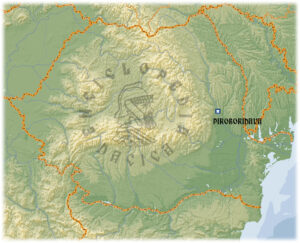
Piroboridavawas a Davalocated a little below Confluence Rivers Trotus and Siret, on the left bank of theSiret, to the NW ofVillage Poiana, a commune in Galaţi County.[1]
The first archaeological surveys in the area were conducted byVasile Pârvanin 1913. This was followed by the study of the site through surveys conducted by Vasile Pârvan andGeorge Stephenin 1926. The activity was continued through systematic research of the "Citadel" and its surroundings by teams of archaeologists led byRadu VulpeandEcaterina Dunăreanu-Vulpebetween 1927-1931, 1939-1940 and 1949-1950.
Last The period of extensive systematic research in the Poiana site is the one carried out between 1985-1990 through the collaboration of the Institute of Archaeology of Iasi and the Tecuci Mixed Museum, the team being led by archaeologist Silvia Teodor, joined by Stela Țau and Mircea Nicu.[2]
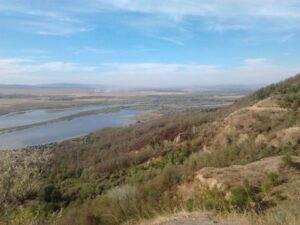
Located on a spur detached from the high terrace of Siret, the settlement was defended on three sides by steep and particularly high ravines and on the fourth, by a wave with the corresponding moat, which separates it from the rest of the terrace. Beyond this, however, continues the habitation with the character of a civil settlement and, further, on the territory of the village, stretches the necropolis, within which graves have also been identifiedtumular. In the acropolis, excavations have identified — overlapping a settlement inBronze Age, as well as Hallstattian traces - six levels of Geto-Dacian habitation, lasting from the 4th century BC to the 1st century AD. The life of the settlement ended in the circumstances of the violent Dacian-Roman conflict. Due to repeated disturbances of deposits, only dwellings from the last period could be identified, but, after the incomplete remains that could be captured in the older levels, they seem to have been similar.
Church "Saint Nicholas" - (Banu)
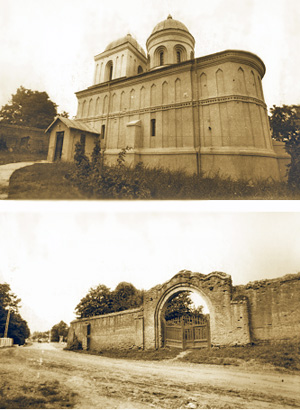
Nave church, with rounded altar apse. The entrance door to the church has, at the top, an opening in a trilobed arch. The same trilobed arch is found at the access doors to the chancel, practiced in a wall iconostasis, with a thickness of 60 cm. The narthex and nave have square shapes and are separated by a double arch, 120 cm wide. Above the narthex rises the bell tower with square base, and over the nave develops the cylindrical tower of the Pantocrator.
Nave church, with rounded altar apse. The entrance door to the church has, at the top, an opening in a trilobed arch. The same trilobed arch is found at the access doors to the chancel, practiced in a wall iconostasis, with a thickness of 60 cm. The narthex and nave have square shapes and are separated by a double arch, 120 cm wide. Above the narthex rises the bell tower with square base, and over the nave develops the cylindrical tower of the Pantocrator.
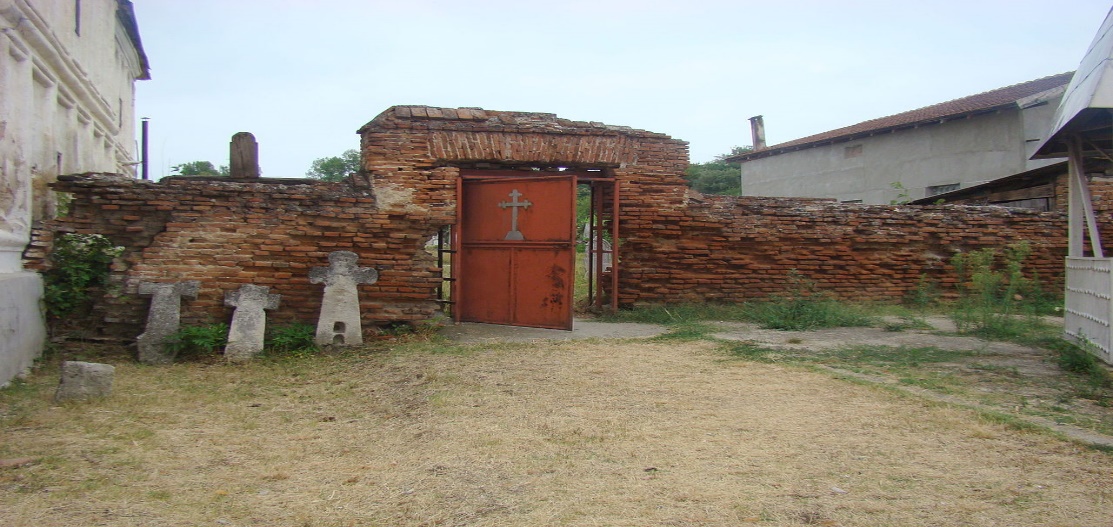
The exterior walls are divided into two registers by a brick girdle placed on the corner. The same ornamental motif is repeated at the cornice. Long threads, finished with a bow in braces, pass over the two registers and give the church an escalated line. The construction of the church began in 1800 and was consecrated in 1807, and the enclosure wall was finished in 1868. It is 200 years old and is the only one surrounded by an enclosure wall that is preserved whole.
The founders, Ban Nicolae Lentin and his wife Catinca were Greeks who came to Moldova with Prince Alexandru Moruzzi. They had only one son, John, who died young. His tomb is in the southwestern part of the church. After the death of their son, the Lentins dedicated the church to the Neamţ monastery to which they also gave the two estates from Nărteşti and Piscu Covurlui, with an area of 1800 jaws. On the southwest side there were earthen cells.
In 1857 the sheet metal on the roof was changed and the porch was built; in 1893 the southeast corner and the northeast corner of the wall were consolidated.
The earthquake of 1901 damaged the bell tower and the iconostasis, only in 1926 the repairs began according to a project drawn up by the Historical Monuments Commission. The interior plaster was also restored by the painter I. Dumitriu from Tecuci. The consecration took place on December 5, 1937. The earthquake of 1940 completely destroyed the Pantocrator spire.
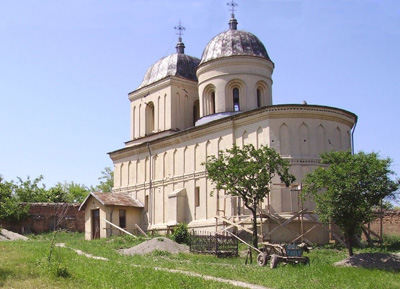
"Costache Negri" Memorial House
The museum was founded in the mansion of Costache Negri's family, built in the early nineteenth century, in the style of the peasant house from Moldova, of evolved type. In 1943 the building was declared a historical monument and it was decided to turn it into a museum. This intention materialized only after 25 years, the current organizational formula being inaugurated on May 21, 1986. In the seven exhibition halls there are furniture and decorative art pieces, from famous European styles, which were fashionable in boyar salons of the period; paintings, photographs and documents relevant to the life and activity of Costache Negri, his family and collaborators. There are also exhibited cultural goods, with memorial value, related to personalities such as: Mihail Kogălniceanu, Nicolae Bălcescu, Vasile Alecsandri, Alexandru Ioan Cuza etc. In this way, one can perceive more coherently, the environment in which the pasoptist, unionist spirit manifested, as well as the manner in which they materialized in a century (nineteenth), in a Romanian world connected to European civilization.
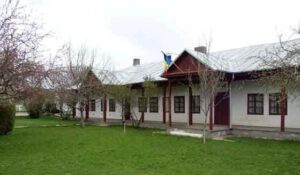
Wave of Atanaric
City: From Stoicani to Toflea
Address: The eastern end in Lunca Prutului from the territory of Stoicani village to the localities Brăhăşeşti-Toflea, on the left bank of Siret, in the NW part of Galaţi county - LMI code (List of historical monuments): GL-I-s-A-02975
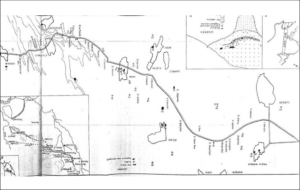
Coming from the Gotland area on the Baltic Sea, at the beginning of the third century the Goths settled in the area north of the Black Sea, occupying a huge territory broadly between the Don and the limes of the Lower Danube. Atanaric, leader of a conservative group of Goths, tries hard to oppose the Huns, who come as a roller, causing the movement of several tribes and pushing them in front of them.
The first attempt to defend Atanaric apparently took place on the Dniester line and proved to be futile, as evidenced by the chronicle of Ammianus Marcellinus, because the Huns cross the Dniester by ford and on improvised rafts, on bellows, enveloping the Visigothic army that is forced to retreat. Atanaric manages to regroup his forces and organize a second defense, according to the same Ammianus, in an area with heights where "high walls" are erected.
Chrissoveloni Mansion
Ghidigeni, Galaţi County
The story of the mansion from Ghidigeni has its roots in the courageous past of the young Zanni Chrissoveloni who fled the islet of Chios and ended up in the Romanian Lands, where he did successful grain and timber business. This entrepreneurial spirit arrives in 1848 in Galati and soon establishes one of the most powerful banking businesses – Chrissoveloni Bank. This bank was one of the most prosperous in the interwar period, expanding to Vienna, Paris or New York. The estate in Ghidigeni was bought by Nicolas Chrissoveloni, Zanni's nephew, from Dimitrie Mavrocordat, in 1879. Here was built 8 years later a mansion together with its annexes, everything being very modern for those times: romantic architecture, rose gardens, water pools, bowling alleys, two tennis courts, one being covered and representing the only one of its kind in Europe at that time, the central heating system and radiators, the rooms heated by floor.
The Chrissoveloni family was involved in the development of Ghidigeni, building a church, a school and three factories – brick, spirit and vinegar. The aristocracy of the time arrived at the mansion, this space being famous for its parties. Among the notable guests were the royal couple of Romania, and Queen Marie became one of the best friends of Sybilla Chrissoveloni, wife of Jean (son of Nicolas). In World War I, the two ladies install a field hospital in the palace, an approach in which the queen's daughters are involved, here being founded the "Queen Maria" Ambulance Society. In 1948 the mansion was nationalized, having the function of a state agricultural household, then of a school for children with special needs. In 2004 the ensemble was returned to the heirs of the Chrissoveloni family.
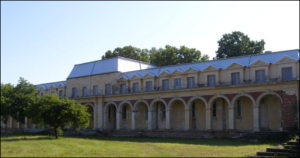
Monastery "Assumption of the Virgin Mary", Adam
Adam village, Drăguşeni commune, jud. Galati
Historical monument
Feasts: The Assumption of the Virgin Mary and the Healing Spring
Abbess: nun Anastasia Cimbru
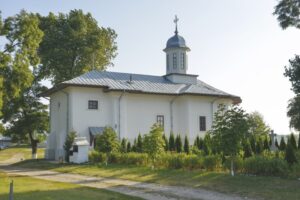
Located in Adam village, Drăguşeni commune, on a hill that dominates the entire village, Adam Monastery is one of the most important old hermitages in the entire southern area of Moldova. Access to the monastery can be made either from the national road DN 26 Galati – Bârlad, between Bursucani and Bălăbăneşti, or from the county road DJ 251A Tecuci – Tg. Bujor, through Fundeanu
Historian
Local tradition, historically unconfirmed,
states that the first monastic settlement was founded in parts of Adam in the middle of the sixteenth century when a monk who came from the East showed a wealthy shepherd from the woods of these places an icon of the miracle-working Mother of God, proposing him to build a hermitage here. This is how it would have been built, apparently, a first wooden church, dedicated to "All Saints". Unanimously recognized historical documents state, however, that the monastery was founded by Captain Adam in the middle of the seventeenth century, the church being consecrated on October 14, 1652.
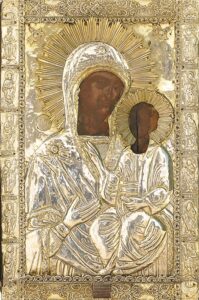
In 1685, Metropolitan Sava and the great boyars confirmed the desire of the founders and abbot Leontius for the monastery to be dedicated to Mount Sinai. Later, on July 5, 1759, Abbot Iorest Movilă writes to Prince Teodor Calimach that, after extensive restoration works, he decides to dedicate this monastery to the Metropolitan Church of Iasi,
Description
Architecturally, the church is flat-planned, with polygonal apses on the outside and semi-round on the inside. The walls are thick, about 1.5 m. On the western side, the church is supported by two buttresses. The altar has a vaulting in semi-calot, finished with a wide arch and added.
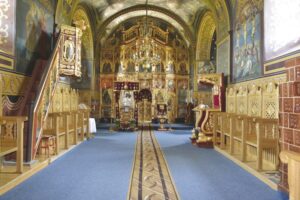
The nave is vaulted, and several arches frame the narrow apses. The nave is separated from the narthex by an arch in a semi-cylinder. The narthex is vaulted, with a window to the north and south, and the porch is closed, with access from the south. The painting, made in oil and tempera, was restored in 2006-2007, together with the iconostasis, of great artistic value, dating from the eighteenth century.
The oldest known inscription of the church dates from 1869 and mentions: "In the days of the Most Exalted Lord Carol I, October 20, 1869, 20, with the help of the Most High and Most Holy Theotokos, this church was repaired".
Buciumeni Monastery
The monastery dates back to the first half of the fifteenth century, being considered one of the oldest monastic hearths in Galaţi County.
Buciumeni Monastery Hram:Trinity
Address: horn. Buciumeni, 807060, jud. Galati
Access: from Tecuci (13.5 km) to the N and from Bârlad (35 km) to the S, on DN 54/E 58 1 to the W branch, near Gărti Berheci, on DJ 252 G Ţepu-Tecuşoru Sec-Buciumeni 15 km (GPS: 46°2'2.59"N, 27°17'30.26"E)
Abbess: stavrofora Macrina HumăContact: +40236822706
Buciumeni Monastery, legend
According to some researchers, around 1430, in Buciumeni there would have been a hermitage of nuns, the wooden church of the hermitage being dedicated to St. Nicholas. The name of a founder is preserved, around 1700, serdar Manolache Radovici, who completely silences the Buciumeni Hermitage, at that time at the head of the community of nuns being the nun Mafta.
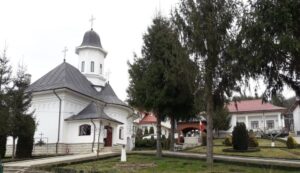
In 1750 the hermitage became metoch of the Roman Bishopric, the dedication of the hermitage being at that time the Holy Trinity. In 1840-1844 the brick church and the bell tower were built. With the law of secularization of monastic assets, from 1863, the monastery will be abolished, leaving here only 12 elderly nuns, most of the nuns spreading to Adam, Agapia and Văratec monasteries.
Under the pastorship of the bishop of the Lower Danube, Melchisedec Ştefănescu (1865-1879), Buciumenu became a monastery again. Although officially disbanded during the communist period, several nuns remain in the settlement. Since 1990, the monastic life has gained a new breath, through the care of His Eminence Casian Crăciun, Archbishop of the Lower Danube.